Christian Tooley on Taboo Investing
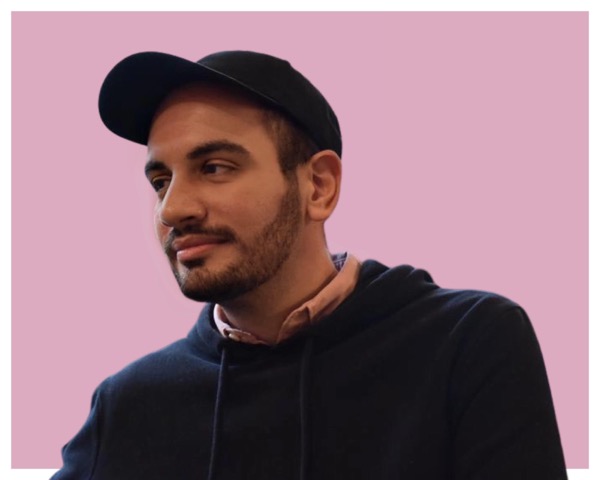
Christian Tooley gave us far more than we had room for in the first edition of the Taboo Investor Insights Report, so we asked if we could publish his answers in full. Luckily for you, he said yes.
Christian talked about taboo investing at SXSW in 2025 and has a well-considered position that we admire. He's interested in preventative health, climate resilience and social infrastructure. How cool.
Read below his unedited answers to three of the top questions we put to him.
1. How do you think about the relationship between cultural discomfort and capital?
Cultural discomfort and capital is in itself a contradiction. Cultural discomfort creates inefficiencies in markets, as a lot of capital ends up being funnelled into sectors and themes that do not enhance our wellbeing, or focus on stimulation instead of nourishment. The irony is a lot of this capital optimises for attention, stimulation and convenience, while sectors that support long-term wellbeing, preventative health or climate resilience struggle to attract equivalent conviction.
So it is funny how we often say it is “too risky” to invest into taboo domains, whether that be taboo areas of health (from sex to gut health), or climate (non-sexy hardware). We need to rethink how our current capital allocation prefers easy “feel-good” impact investments, and understand that bold bets into beautiful complexity are the future. Some of the most compelling opportunities emerge precisely where social discomfort has delayed capital allocation.
2. What's your read on the maturity level of “taboo” markets? And what's to come?
It all depends how you define taboo. I take a broad read. There are your traditional taboos, the ones people find a varying degree of discomfort discussing openly: sexuality, menopause, death. Then there are the unstructured, neglected markets people “don't want to touch” because they're too complex or culturally sensitive. I increasingly think of taboo as a proxy for neglect.
People want businesses in their lives that aren't just there for the sake of consumerism. They want those that address and service our basic human truths. I'm most excited, and see the largest opportunities over the next decade, sitting at the intersection of preventative health, climate resilience, and social infrastructure. I believe, as an advisor and investor whose end-game is tangible systems change, that the real opportunities for returns and impact lie in the too often ignored parts of our society. We can't fix the broken systems around us without thinking regeneratively about how our wellbeing and the planet's are inextricably interconnected.
3. If you were talking to an angel who was curious but uncomfortable, what would you want them to understand?
I'd ask them firstly to look inwards. If you unpack your own taboos, remove all of that ego from the equation, you can invest with more clarity and ethics. I often see, broadly speaking, “impact investors” with some of the most suppressed taboos. You have to embrace your own vulnerability to invest in businesses exploring the betterment of humanity. Becoming aware of those biases can open up opportunities that others systemically overlook. Ego can serve a purpose, but if it remains unchecked and you're afraid to challenge it, the discomfort manifests.
Practically speaking (venture capitalist smirk/sigh) taboos are passed over by mainstream investors, markets are untapped, founders in this space often have lived experiences of these taboos. They are not small opportunities. They are not niche. They're markets that have lacked attention, legitimacy, and funding. The next wave of companies will not focus on the incremental optimisation of systems, but will be building to solve the complex, non-traditional areas of climate, health, and society.