
Taboo + The Hype Cycle

Taboo categories look, from the outside, like markets that never happen. The truth is stranger, and more useful: they happen slowly, quietly, and later than anyone expects, and that delay is precisely where the returns hide.
To see why, it helps to borrow a map most investors already carry in their heads.
The curve everyone knows
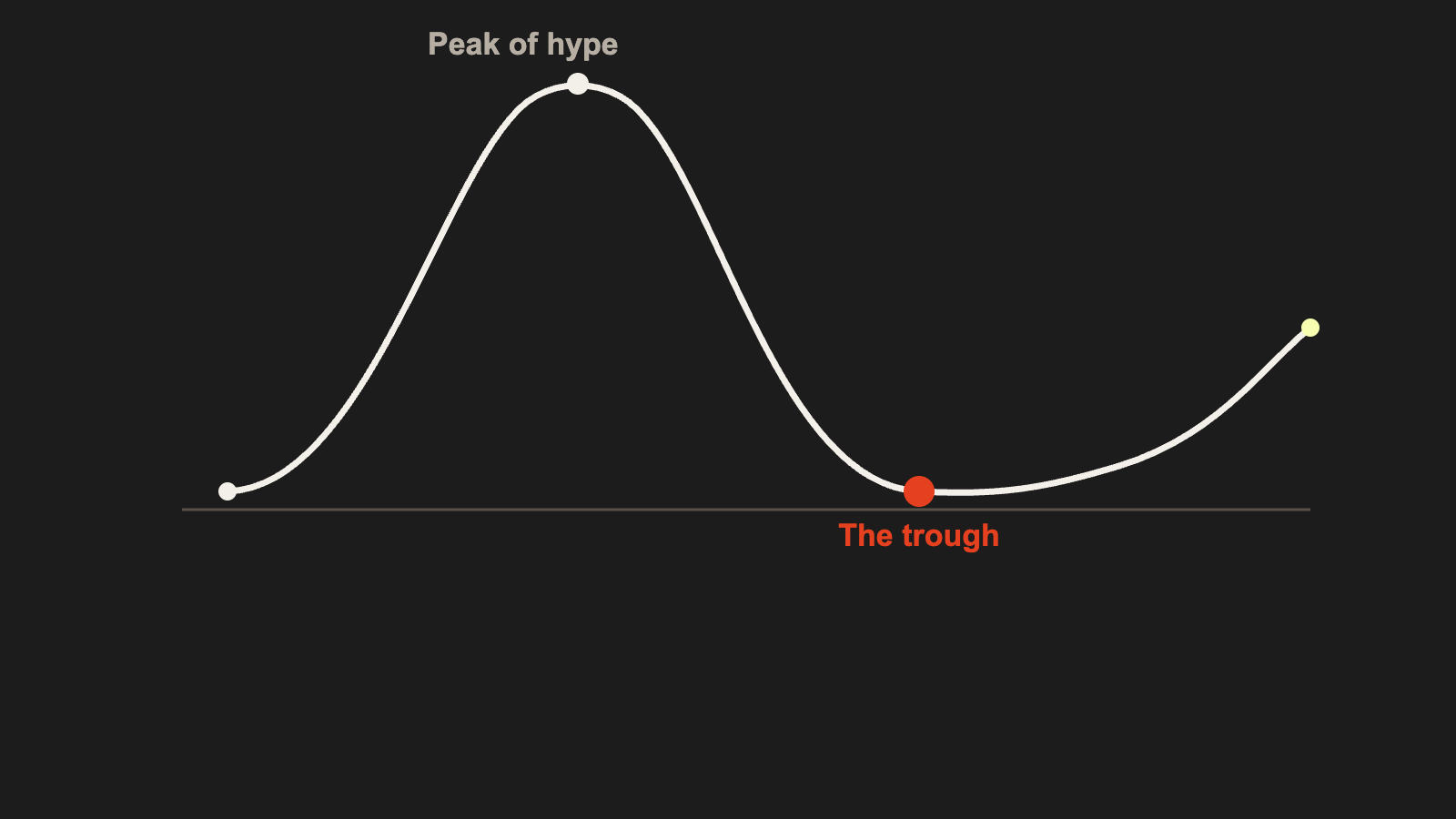
Most investors know the Gartner Hype Cycle. Far fewer act on its central lesson: the returns go to those who buy into the trough, not the peak. Taboo categories rhyme with that shape, but with a twist that makes them easy to overlook and, for the patient, unusually rewarding.
The standard curve
A technology is triggered into public view. Expectations race ahead of what it can actually do and inflate into a peak. The early businesses disappoint, the category collapses into a trough, and then the survivors quietly climb the slope until the technology settles onto a plateau and becomes a real market. Most people know the shape. Fewer act on its central lesson: the money is made by those who buy the trough, not the peak.
Where taboo breaks the pattern
Taboo categories rhyme with this curve, but only as a lesson about timing, not as a story about a technology maturing. They have never had a single core-technology wave, the way crypto or fintech did, where one innovation floods in, inflates and crashes. Here the first peak stays thin, and the reason is the taboo itself.
The peak, pressed flat
Taboo categories never get their loud first act. The discomfort keeps capital and attention away, so the spike that usually announces an emerging category never really forms. The first wave was noisy but shallow, content plays and novelty commerce, and few businesses built lasting defensibility or reached meaningful scale. The sector enters the trough on schedule, without ever having had its hype. And yet those muted early spikes are exactly what's worth watching, because they signal what comes next.
What's climbing the slope now
What's climbing the slope in these categories is different in kind. Not one maturing technology shared across a sector, but a scattered cohort of companies applying deep tech to their field, and increasingly developing the core science themselves. Their frontier is the body, the last one we've left, where the hard problems still demand genuine invention rather than the recombination of existing tools.
Later, but larger
Flat early, then a later, larger take-off as winners emerge and capital arrives.
Because these companies own their science, their edge compounds rather than commoditising, the opposite of how much of crypto's and fintech's early value was competed away once the tools became shared infrastructure. The curve stays flat early, then takes off later and larger as the winners emerge and capital finally arrives.
The lag is the opportunity
A flat peak and a stretched slope are, between them, almost a design for being overlooked: nothing loud enough to announce the category, nothing fast enough to reward the impatient. The positioning most investors hold was formed watching that thin first wave fail, and it is out of date. They are pattern-matching to a spike that barely happened, and missing the IP being built now.
Put it together and you have a rare thing: a frontier that is large, real and mispriced. Women's health receives around 5% of global health R&D. Sexual wellness, addiction recovery and end-of-life care are vast, growing markets carrying a fraction of the venture footprint their size would predict.
Culture moves. The market corrects. Capital follows. And the lag is where returns are made, or missed.